Mills, Factories and the Working Economy
How The County has earned its living
The industrial roots of Aroostook County run deep through the processing mills, forest operations, and railroad corridors that transformed local harvests into manufactured goods. From early water-powered grist and starch mills to sprawling modern plants producing paper, lumber, and frozen food, local enterprise has driven the region's livelihood for generations. Today, active facilities work alongside historic depots and museums that chronicle the communities built on manual skill and regional production.
 Your logo here
This page could be sponsored
Your business name here
Sponsor This Page
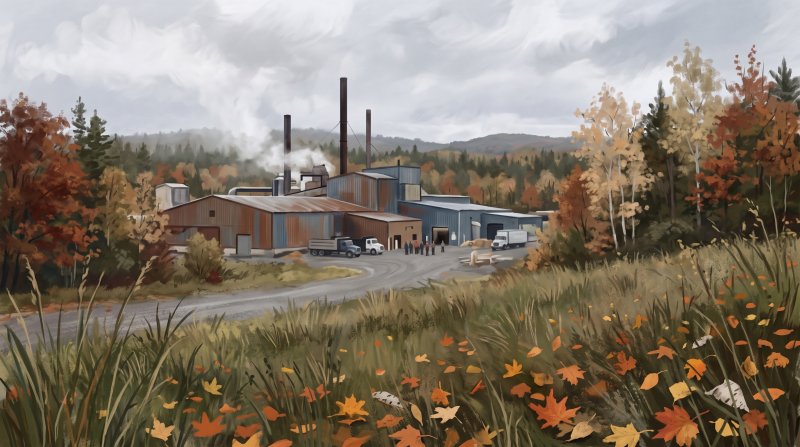
Aroostook County's manufacturing legacy took hold in its agricultural soils, where the processing of raw harvests into industrial goods formed the backbone of mills, factories and the working economy. In 1870, the county's first potato starch factory opened in Caribou, where Alba Holmes converted an unused woolen mill in 1871 to produce powdered starch for sizing cloth in southern Maine cotton textile mills. Presque Isle established its own factory in 1874 when an entrepreneur named Wheeler arrived from New Hampshire, soon followed by Limestone opening a starch factory along Limestone Stream in 1876. By 1904, 62 starch factories operated across the county, with 20 owned by Presque Isle industrialist Thomas H. Phair, known as the 'Starch King.' By 1930, Aroostook County had become the leading producer of potato starch across both the United States and Canada, supported by community developments like A. P. Bennett's 1878 construction of Maine's first butter factory in Linneus.
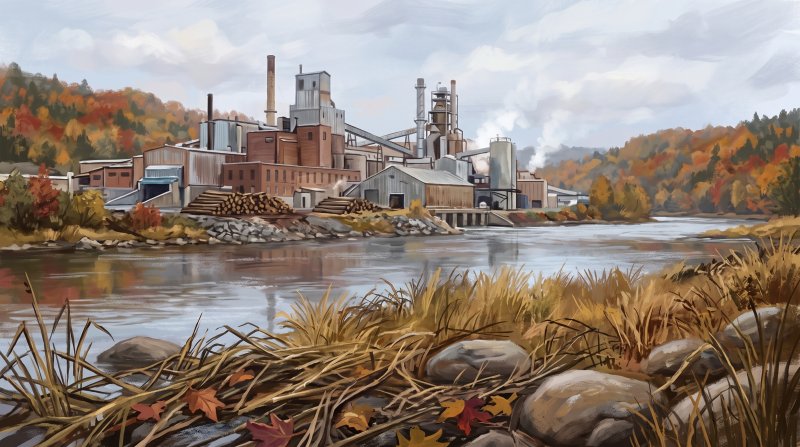
Transportation networks expanded in lockstep with these growing operations. The Bangor and Aroostook Railroad brought direct lines to Houlton in 1894, reached Caribou and Fort Fairfield in 1895, and pushed the Ashland Branch north to Fort Kent in 1902 and west to St. Francis in 1909. These routes replaced slower local hauling, allowing forest mills to ship timber and processed wood pulp directly to northeastern urban markets alongside agricultural goods. In Presque Isle, industrialist Arthur R. Gould purchased a sawmill along Presque Isle Stream in 1889, upgrading it to process lumber, shingles, and clapboards before founding the Aroostook Valley Railroad to move supplies and logs. Further north along the Saint John River, Madawaska shifted from an agricultural settlement into an industrial center when Archibald Fraser led Fraser Paper, Limited to open a major paper mill in 1925, running its first Fourdrinier machine by piping slush pulp across the international border.
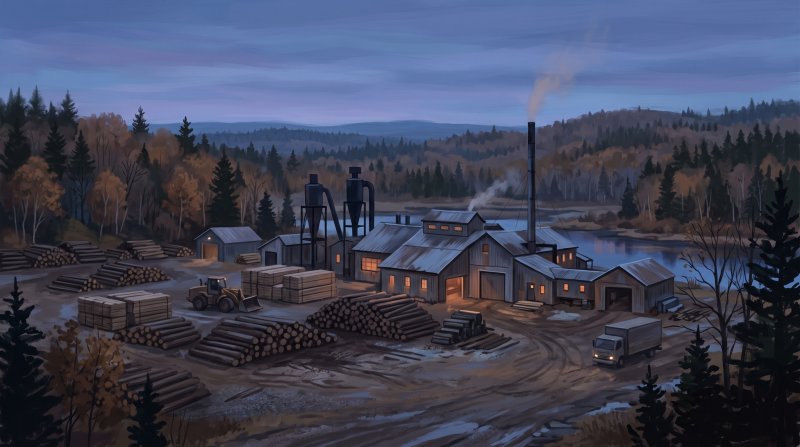
Over the mid-twentieth and late twentieth centuries, processing innovations shifted regional output toward modern specialty goods and frozen foods. Following work by Caribou inventor O.P. Pierson, the Birds Eye Company began commercially marketing frozen french fries in Caribou in 1947. Canadian processor McCain Foods established its U.S. subsidiary by purchasing an existing Washburn plant in 1975, then acquired an Easton facility in 1976 that grew to process roughly one-third of the county's potatoes. Nearby in Easton, where Fred H. Vahlsing Jr. had built a sugar beet refinery in the 1960s, Huber Engineered Woods repurposed the site in 1983 to manufacture subflooring, oriented strand board panels, and engineered wood flooring. Modern operations remain integral across the county, seen in the McCrum automated frozen potato specialty plant built in Washburn in 2020, the Ashland sawmill operated by Irving Forest Products, Maine Woods Company's commercial hardwood sawmill in Portage Lake, and Columbia Forest Products' hardwood veneer mill on Missile Street in Presque Isle peeling northern hardwoods on a rotary lathe.
The heritage that built these towns is preserved at museums and depots throughout the area. In Frenchville, a 1910 Bangor and Aroostook Railroad station and 40-foot wooden water tank stand alongside the preserved Corriveau Mill records at the University of Maine at Fort Kent, while Van Buren's Acadian Village displays the Violette Grist Mill, Wool Carding Mill, and historic machinery from the 1912 Corriveau Mill. Restored rail depots like the 1902 Fort Kent Railroad Station Museum highlight the freight movement of lumber, shingles, and potatoes. Further south, the Aroostook County Historical and Art Museum in Houlton displays early farmer delivery records and starch industry photography, and the Southern Aroostook Agricultural Museum in Littleton preserves regional trades with an on-site blacksmith shop, barrel-making machinery, and potato grading equipment.
Where to go: St. John Valley · Central Aroostook · Southern Aroostook · North Woods
Every fact on this page comes from the sources listed below. Histories are told in many ways, so where sources differ we say so.
The facts behind this history
·
Background and causes (6)
- Bangor and Aroostook Railroad Industrial Expansion Houlton
- The Bangor and Aroostook Railroad extended lines to Houlton in 1894 and to Caribou and Fort Fairfield in 1895. The rail network provided factories and mills direct transit to major northeastern urban markets, replacing slower local hauling routes.[1]
- Caribou First Starch Factory Caribou
- Aroostook County's first potato starch factory opened in Caribou in 1870. The factory processed local potatoes into powdered starch that was shipped to southern Maine cotton textile mills for sizing cloth.[2]
- Countywide Starch Production Peak Aroostook County
- By 1904, 62 starch factories operated across Aroostook County. By 1930, the county had become the leading producer of potato starch in the United States and Canada.[3]
- Fraser Paper Industrial Transition in Madawaska Madawaska
- Madawaska transitioned from an agricultural settlement into an industrial center following the arrival of the Fraser Company paper mill in 1925. The mill shifted the town's commercial focus toward the riverfront near the international bridge.[4]
- Northern Rail Network Expansion to Forest Mills Fort Kent
- The Bangor and Aroostook Railroad extended the Ashland Branch to Fort Kent in December 1902 and west to St. Francis in 1909. These rail links enabled mills across northern Aroostook County to haul timber and processed wood pulp directly to market.[1]
- Presque Isle Early Starch Manufacturing Presque Isle
- Presque Isle's first potato starch factory opened in 1874, marking the third facility established in Aroostook County. By the turn of the twentieth century, local entrepreneur Thomas Phair owned 20 of the county's 62 operating starch factories.[2]
Key events and dates (7)
- Birds Eye Frozen French Fry Marketing Caribou
- Following development by Caribou inventor O.P. Pierson, commercially frozen french fries were marketed by the Birds Eye Company in Caribou in 1947.[5]
- First Aroostook County Starch Factory Caribou
- In 1871, Alba Holmes converted an unused woolen mill in Caribou into the first factory in Aroostook County to manufacture starch from potatoes.[6]
- Huber Engineered Woods Facility Opening Easton
- In 1983, the site of Easton's former sugar beet processing facility was repurposed into a Huber plant manufacturing engineered wood flooring and sheathing products.[7]
- Madawaska Paper Mill Opened Madawaska
- Fraser Papers established its paper mill in Madawaska in 1925, piping pulp across the Saint John River border from its Canadian facilities.[8]
- McCain Foods Easton Acquisition Easton
- In 1976, McCain Foods acquired the Easton potato processing facility, which grew into one of the largest frozen potato manufacturing operations on the East Coast.[9]
- McCain Foods Washburn Acquisition Washburn
- In 1975, Canadian processor McCain Foods established its U.S. subsidiary by purchasing an existing potato-processing plant in Washburn.[10]
- Wheeler Starch Factory Built Presque Isle
- In 1874, a factory for manufacturing starch was erected in Presque Isle by an entrepreneur named Wheeler from New Hampshire.[6]
Legacy today (6)
- Acadian Archives Corriveau Mill Preservation Records Fort Kent
- The Acadian Archives at the University of Maine at Fort Kent houses the archival collection on the Corriveau Mill, documenting the history of the 1907 water-powered buckwheat grist mill and wool-carding facility that historically operated on the Violette Brook in Frenchville.[11]
- Acadian Village Violette Grist Mill and Wool Carding Mill Van Buren
- The Acadian Village open-air historic complex preserves traditional regional processing industries through its Violette Grist Mill and Wool Carding Mill exhibit. The site interprets early manufacturing and textile work in the St. John River Valley.[12]
- Fort Kent Railroad Station Museum Fort Kent
- Constructed in 1902 at the terminus of the Fish River line later operated by the Bangor and Aroostook Railroad, the restored passenger and freight depot is operated as a museum by the Fort Kent Historical Society focusing on the rail transport that enabled the growth of the regional potato, lumber, and shingle trades.[13]
- Frenchville Railroad Station and Green Water Tank Frenchville
- The Bangor and Aroostook Railroad constructed a station and 40-foot enclosed wooden water tank in 1910 to supply steam engines hauling agricultural and forest freight, surviving today as a museum listed on the National Register of Historic Places.[14]
- Historic Starch Industry Records and Photographs Houlton
- The Aroostook County Historical and Art Museum in Houlton preserves archival photography and records detailing the 19th- and 20th-century potato starch processing industry, including records of farmers delivering potatoes directly to local starch factories.[15]
- Southern Aroostook Agricultural Museum Trades Exhibits Littleton
- The Southern Aroostook Agricultural Museum exhibits tools and equipment illustrating rural trades that sustained Aroostook's potato processing and shipping economy, including a historical barrel-making shop, blacksmith shop, and early mechanical equipment.[16]
People (5)
- A. P. Bennett and Early Butter Manufacturing Linneus
- A. P. Bennett constructed Maine's first butter factory in Linneus in 1878, pioneering commercial dairy processing in southern Aroostook County.[17]
- Archibald Fraser and the Madawaska Paper Mill Madawaska
- Archibald Fraser led Fraser Paper, Limited in constructing a major paper mill in Madawaska in 1925, which began operating its first Fourdrinier paper machine receiving slush pulp via a pipeline across the international border.[18]
- Arthur R. Gould's Lumber and Industrial Operations Presque Isle
- Industrialist Arthur R. Gould purchased a sawmill along the Presque Isle Stream in 1889, upgrading its machinery to process shingles, clapboards, and lumber before founding the Aroostook Valley Railroad to transport logs and supplies.[19]
- Fred H. Vahlsing Jr. and Maine Sugar Industries Easton
- Fred H. Vahlsing Jr. established Maine Sugar Industries and built a sugar beet refinery in Easton in the 1960s adjacent to his existing potato processing facility.[20]
- Thomas H. Phair and the Starch Industry Presque Isle
- Presque Isle resident Thomas H. Phair, known as the 'Starch King,' owned 20 of Aroostook County's 62 potato starch factories around the turn of the century.[21]
Places (8)
- Ashland Sawmill Ashland
- The Ashland sawmill, operated by Irving Forest Products, manufactures dimensional construction lumber from locally sourced timber.[22]
- Columbia Forest Products Veneer Mill Presque Isle
- Columbia Forest Products operates a hardwood veneer mill on Missile Street in Presque Isle that peels northern hardwoods using a rotary lathe.[23]
- Huber Engineered Woods OSB Mill Easton
- Huber Engineered Woods manufactures oriented strand board (OSB) panels and subflooring at its manufacturing plant located on Station Road in Easton.[24]
- Madawaska Paper Mill Madawaska
- The paper mill in Madawaska opened in 1925 under Fraser Companies and operates four paper machines producing specialty paper products connected to a pulp complex across the river in Canada.[25]
- Maine Woods Company Hardwood Sawmill Portage Lake
- Maine Woods Company, LLC has operated a commercial hardwood sawmill and manufacturing facility in Portage Lake since 1999.[26]
- McCain Foods Easton Processing Facility Easton
- McCain Foods acquired its frozen potato processing plant in Easton in 1976, which processes approximately one-third of the potatoes grown in Aroostook County into frozen fry specialties.[27]
- McCrum Potato Processing Plant Washburn
- Penobscot McCrum built an automated commercial frozen potato specialty manufacturing facility in Washburn in 2020.[28]
- Presque Isle Potato Starch Processing Presque Isle
- During the late 19th and early 20th centuries, Presque Isle and surrounding communities hosted numerous potato starch factories to process potatoes and supply domestic textile markets.[29]
Where to learn more (8)
- Acadian Village Corriveau Mill Display Van Buren
- The Acadian Village historical site in Van Buren maintains the Violette Industrial Building, which exhibits equipment and machinery preserved from the 1912 Corriveau Mill.[30]
- Aroostook National Starch Production Standing Aroostook County
- Maine Historical Society records document that by 1930, Aroostook County had become the leading producer of potato starch across both the United States and Canada.[31]
- Aroostook Starch Industry Growth Presque Isle
- According to historical archives on Maine Memory Network, Aroostook County's first potato starch factory opened in Caribou in 1870, followed by a third in Presque Isle in 1874. By the turn of the century, the county had 62 starch factories, with 20 owned by Presque Isle manufacturer Thomas Phair.[32]
- Caribou Water-Powered Starch Production Caribou
- Historical records document that Caribou utilized water power from Caribou Stream and the Aroostook River for manufacturing mills, and its first potato starch factory began operating in 1871.[33]
- Limestone Dam and Starch Mill History Limestone
- Town history recorded by the Penobscot Marine Museum and Maine Memory Network notes that Limestone was settled after a dam and mill were built on Limestone Stream in 1845, followed by the opening of a starch factory in 1876.[34]
- Presque Isle Historical Society Downtown Industrial Tour Presque Isle
- The Presque Isle Historical Society's historical walking sites include early industrial facilities such as Fairbanks Mills on State Street and the historic Presque Isle Cigar Factory.[35]
- Southern Aroostook Barrel and Equipment Collection Littleton
- The Southern Aroostook Agricultural Museum in Littleton preserves 20th-century working equipment including potato grading tools, barrel-making machinery, and an on-site blacksmith and barrel shop.[36]
- St. John Valley Milling Heritage Madawaska
- The Acadian Archives and cultural documentation note that industrial mills were established in Fort Kent, Madawaska, and Keegan during the 19th century, with Fraser Paper Ltd. becoming the region's largest employer after purchasing the James Murchie & Sons mill in 1916.[37]
Sources (37)
- Bangor & Aroostook Railroad remembered - Trains Magazine — trains.com , viewed Oct 16, 2026
- Presque Isle: The Star City - History of Presque Isle — mainememory.net , viewed Oct 16, 2026
- Maine History Online - Farming in Maine - Maine Memory Network — mainememory.net , viewed Oct 16, 2026
- Main Street, Madawaska, ca. 1975 - Maine Memory Network — mainememory.net , viewed Oct 16, 2026
- Caribou celebrates homegrown inventor of frozen french fries - Bangor Daily News — bangordailynews.com , viewed Oct 16, 2026
- A history of potatoes in Aroostook County — digitalcommons.library.umaine.edu , viewed Oct 16, 2026
- Easton, carved from wilderness 150 years ago, ponders future - Bangor Daily News — bangordailynews.com , viewed Oct 10, 2026
- Fraser mill and international bridge, Madawaska, ca. 1940 - Maine Memory Network — mainememory.net , viewed Oct 16, 2026
- Easton community remembers McCain Foods co-founder - The County — thecounty.me , viewed Oct 16, 2026
- McCain Foods Limited | Encyclopedia.com — encyclopedia.com , viewed Oct 16, 2026
- Acadian Archives Ready Reference Guide - UMFK — umfk.edu , viewed Oct 16, 2026
- Photos and Video of the Village - Acadian Village | Van Buren, Maine — acadianvillage.squarespace.com , viewed Oct 16, 2026
- Fort Kent Railroad Station - Maine Acadian Culture (U.S. National Park Service) — nps.gov , viewed Oct 16, 2026
- Frenchville Railroad Station and Water Tank - Wikipedia — en.wikipedia.org , viewed Oct 10, 2026
- The Star City - Harvesting Potatoes - Presque Isle — mainememory.net , viewed Oct 16, 2026
- Southern Aroostook Agricultural Museum - Maine Tourism Association — visitmaine.com , viewed Oct 16, 2026
- Organic Dairy Industry Growing in Aroostook County — mofga.org , viewed Oct 11, 2026
- FRASER, ARCHIBALD – Dictionary of Canadian Biography — biographi.ca , viewed Oct 16, 2026
- Presque Isle: The Star City - Arthur R. Gould - Maine Memory Network — mainememory.net , viewed Oct 16, 2026
- The Sugar Beet Fiasco - ArcGIS StoryMaps — storymaps.arcgis.com , viewed Oct 16, 2026
- Presque Isle: The Star City - History of Presque Isle - Maine Memory Network — mainememory.net , viewed Oct 16, 2026
- Made in Maine: An Aroostook County sawmill that produces construction's essential lumber — mainebiz.biz , viewed Oct 16, 2026
- PRESQUE ISLE, ME | Columbia Forest Products — columbiaforestproducts.com , viewed Oct 16, 2026
- US Department of Labor renews 'Star Level' designation of Huber Engineered Woods LLC for workplace safety, health achievements — osha.gov , viewed Oct 16, 2026
- Twin Rivers Paper Celebrates 100 Years of Papermaking — twinriverspaper.com , viewed Oct 16, 2026
- Mills - Town of Portage Lake, Maine — townofportage.org , viewed Oct 16, 2026
- Up close: McCain Foods Easton factory in Maine | PotatoPro — potatopro.com , viewed Oct 16, 2026
- McCain Foods Announces Agreement to Acquire Penobscot McCrum — mccain.com , viewed Oct 16, 2026
- The Star City - Harvesting Potatoes - Page 1 of 13 - Presque Isle — mainememory.net , viewed Oct 16, 2026
- Acadian Village - Photo Gallery (U.S. National Park Service) — nps.gov , viewed Oct 16, 2026
- Maine History Online - Farming in Maine - Maine Memory Network — mainememory.net , viewed Oct 16, 2026
- Presque Isle: The Star City - History of Presque Isle — mainememory.net , viewed Oct 16, 2026
- Powers Theater, Caribou, 1920, 1920 - Maine Memory Network — mainememory.net , viewed Oct 16, 2026
- Main Street, Limestone, ca. 1915 - Maine Memory Network — mainememory.net , viewed Oct 16, 2026
- Virtual Tours of Historic Downtown - Presque Isle Historical Society — pihistory.org , viewed Oct 16, 2026
- Southern Aroostook Agricultural Museum - Maine Tourism Association — mainetourism.com , viewed Oct 16, 2026
- Milling - Acadian Culture in Maine — acim.umfk.edu , viewed Oct 16, 2026
Last updated October 17, 2026.