Early Towns and First Families
How the towns of The County began
The story of early towns and first families in Aroostook County reflects waves of distinct pioneers carving out homesteads in the northern wilderness. From Acadian refugees along the Saint John River to Massachusetts settlers and planned immigrant colonies, these communities shaped the border country. Today, historical societies and preserved landmarks keep their foundational records and homesteads alive.
 Your logo here
This page could be sponsored
Your business name here
Sponsor This Page
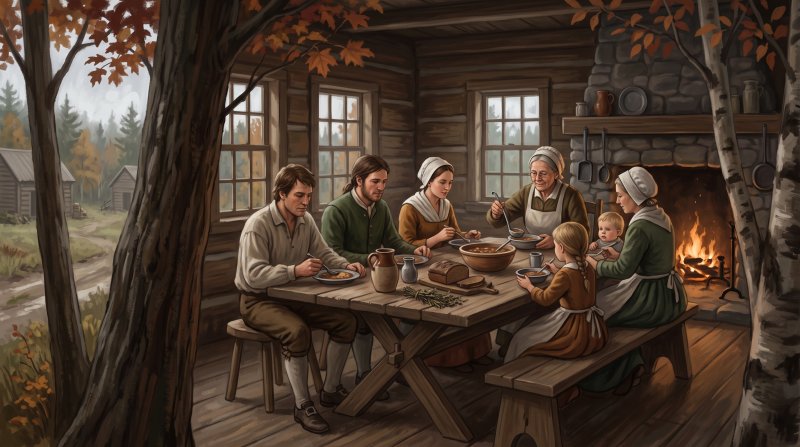
The history of early towns and first families began along the rivers of the far north, where Acadian French refugees reached the south bank of the St. John River in June 1785. Settlers including Louis Mercure, Jean-Baptiste Cyr, and Joseph Daigle arrived near the present-day church of St. David, where Daigle erected a cross, marking the foundation of Madawaska. Down south, John Putnam arrived in the Houlton area in 1805, followed in 1807 by Aaron Putnam and Joseph Houlton, who led migrating families from New Salem, Massachusetts, after purchasing the southern half of the township from New Salem Academy trustees. Houlton became the area's first incorporated town on March 8, 1831, serving as the oldest incorporated town in what soon became Aroostook County.
Throughout the following decades, pioneer families took root across neighboring river valleys. Peter Bull settled in Maysville near the mouth of Presque Isle Stream in 1822, followed in 1828 by Dennis Fairbanks, who cleared land, obtained a 640-acre grant from Maine and Massachusetts, and erected a home, gristmill, and sawmill to establish Presque Isle. That same year, Alexander Cochran built a dam and gristmill on Caribou Stream, preceding Ivory Hardison, who built a log home south of the stream in 1842. Along the Aroostook River, former soldier Michael Russell arrived as the founding settler of Fort Fairfield, while William Dalton settled in 1835 at the confluence of the Big Machias and Aroostook rivers, alongside Benjamin Howe, to begin Ashland. Orrin Laughton and Benjamin Gerry cleared land in Dyer Brook around 1844, and Ephraim Barnum brought his family to Woodland in 1860.
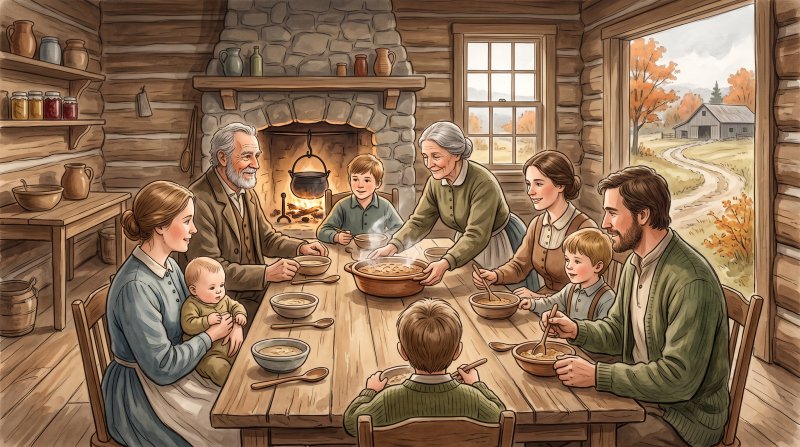
Civil organization quickly followed this frontier growth. On May 1, 1839, the Maine Legislature formally created Aroostook County out of northern Penobscot and Washington counties to secure civil order during the border dispute, with the Webster-Ashburton Treaty of August 9, 1842, ultimately fixing the northern boundary lines. Communities steadily incorporated, with Fort Fairfield establishing itself in 1858, Presque Isle and Lyndon (later Caribou) in 1859, Ashland in 1862, Fort Kent in 1869, and Woodland in 1880. Meanwhile, planned migration introduced new traditions; on July 23, 1870, Maine Commissioner of Immigration William Widgery Thomas Jr. guided fifty-one Swedish settlers, including lay preacher Nils Olson, to northern Aroostook to establish the New Sweden agricultural colony.
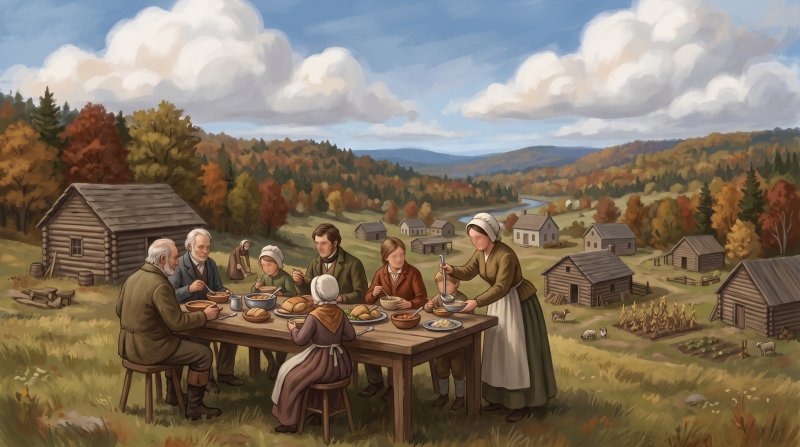
Today, the memory of these early settlements remains carefully preserved. In Madawaska, a fourteen-foot marble cross marks the Acadian Landing Site, while the Acadian Archives at the University of Maine at Fort Kent and the Fort Kent Historical Society preserve family genealogies and settlement life, including exhibits at the Daigle Dube House. The open-air Acadian Village in Van Buren safeguards historic pioneer structures, just as the Presque Isle Historical Society interprets settlement at the Maysville Museum, the New Sweden Historical Society maintains the Capitolium Museum and First Settlers Monument, and Houlton's Cary Library and Aroostook County Historical and Art Museum hold extensive pioneer records.
Where to go: St. John Valley · Central Aroostook · Southern Aroostook · North Woods
Every fact on this page comes from the sources listed below. Histories are told in many ways, so where sources differ we say so.
The facts behind this history
·
Background and causes (7)
- Creation of Aroostook County Aroostook County
- Aroostook County was created from northern portions of Penobscot and Washington counties by act of the Maine Legislature to solidify Maine's jurisdictional hold and civil organization during the border dispute.[1]
- First Settlement of Ashland Ashland
- William Dalton began settlement at Township No. 11, Range 5 in 1835 at the confluence of the Big Machias and Aroostook rivers, followed shortly by Benjamin Howe.[2]
- First Settlement of Dyer Brook Dyer Brook
- The first settlement in Township No. 5, Range 4 was made around 1844 by Orrin Laughton from Smyrna, who cleared land and built a log house, followed shortly by Benjamin Gerry.[3]
- First Settlement of Houlton Houlton
- The southern half of Houlton was purchased from the trustees of New Salem Academy and settled starting around 1807 by founding families including Joseph Houlton and the Putnam family.[4]
- Incorporation of Houlton Houlton
- Houlton was incorporated as a town on March 8, 1831, becoming the first incorporated town in the area that became Aroostook County, named after early settler Joseph Houlton.[5]
- Legislative Act Establishing Aroostook County Aroostook County
- Aroostook County was formally created on May 1, 1839, pursuant to Maine Public Acts 1839, chapter 395, section 1.[6]
- Webster-Ashburton Treaty Settling Northern Maine Boundary Aroostook County
- Signed on August 9, 1842, the Webster-Ashburton Treaty between the United States and Great Britain settled the northeast boundary dispute, definitively fixing the northern boundary lines for early Aroostook County towns and plantations.[7]
Key events and dates (8)
- Establishment of Ashland Ashland
- William Dalton began settlement at the confluence of the Big Machias and Aroostook rivers in 1835, leading to the organization of the plantation in 1840 and town incorporation in 1862.[2]
- First Settlement of Houlton Houlton
- Joseph Houlton and Aaron Putnam led families migrating from New Salem, Massachusetts, to begin the earliest permanent settlement of Houlton in 1807.[8]
- First Settlement of Presque Isle Presque Isle
- Dennis Fairbanks from Waldo County settled on the banks of Presque Isle Stream in 1828, building a home, gristmill, and sawmill to establish the permanent settlement.[9]
- Founding of New Sweden Colony New Sweden
- Led by William Widgery Thomas Jr., a pioneer group of fifty-one hand-picked Swedish immigrants arrived in northern Aroostook County on July 23, 1870, to establish the New Sweden agricultural colony.[10]
- Incorporation of Fort Fairfield Fort Fairfield
- Originally organized as Letter D Plantation along the Aroostook River, the community was formally incorporated as the town of Fort Fairfield in 1858.[11]
- Incorporation of Houlton Houlton
- The settlement of Houlton was officially incorporated by the state legislature as a town on March 8, 1831.[8]
- Settlement of Fort Fairfield Fort Fairfield
- Michael Russell, a former soldier of the Royal West India Rangers from Ireland, arrived in the frontier along the Aroostook River to become the founding settler of Fort Fairfield.[12]
- Settlement of Madawaska Madawaska
- Acadian French families arrived on the south bank of the St. John River in June 1785, making camp near the present-day church of St. David where Joseph Daigle erected an Acadian cross.[13]
Legacy today (6)
- Acadian Archives at the University of Maine at Fort Kent Fort Kent
- The Acadian Archives / Archives acadiennes in Fort Kent serves as a primary repository preserving historical records, maps, photographs, and regional genealogical collections documenting the early Acadian and French-Canadian families of the Upper Saint John River Valley.[14]
- Acadian Landing Site and Marble Cross Madawaska
- The Acadian Landing Site in St. David features a 14-foot marble cross marking the June 1785 arrival of the first Acadian settlers on the southern bank of the upper Saint John River. The site was listed on the National Register of Historic Places in 1973 and is maintained by the Madawaska Historical Society.[15]
- Fort Kent Historical Society Daigle Dube House Fort Kent
- The Fort Kent Historical Society preserves settlement-era regional history across several historic structures, including the Daigle Dube House, which exhibits early family life in the upper Saint John Valley alongside municipal and border controversy records.[16]
- Maysville Museum and Presque Isle Settlement Exhibits Presque Isle
- The Presque Isle Historical Society operates the Maysville Museum at 165 Caribou Road in a rehabilitated municipal hall, housing cornerstone exhibits on northern frontier settlement, town administration, and the rural border disputes that preceded the town's 1859 incorporation.[17]
- New Sweden First Settlers Monument New Sweden
- A monument standing in front of the New Sweden Historical Society museum honors the 51 original Swedish colonists who arrived on July 23, 1870, to establish the state-sponsored colony. It transcribes the names and lot assignments of the founding heads of families who settled New Sweden and Woodland.[18]
- New Sweden Historical Society Capitolium Museum New Sweden
- The New Sweden Historical Society preserves early settlement history and artifacts inside the rebuilt Capitolium museum building, which houses household goods, photographs, and portraits dating back to the arrival of the original 1870 Swedish settlers.[19]
People (7)
- Early Settlement of Maysville Presque Isle
- Peter Bull settled in 1822 in Maysville (Letter G, Range 2) near the mouth of Presque Isle Stream, predating the settlement of neighboring Letter F.[20]
- First Mill and Settlement at Caribou Stream Caribou
- In 1828, Alexander Cochran recorded a house deed and constructed a gristmill and dam on Caribou Stream to serve early regional settlers.[21]
- First Settlers and Religious Organization in New Sweden New Sweden
- Nils Olson and his wife were among the original Swedish colonists who arrived in 1870, with Nils Olson serving as the settlement's first lay preacher.[22]
- Founding of Presque Isle by Dennis Fairbanks Presque Isle
- Dennis Fairbanks settled on Presque Isle Stream in 1828, where he cleared land, received a 640-acre land grant from Maine and Massachusetts, and constructed a sawmill and gristmill.[23]
- Founding of the New Sweden Colony New Sweden
- Under Maine Commissioner of Immigration William Widgery Thomas Jr., a planned colony of 51 Swedish immigrants arrived on July 23, 1870, to establish New Sweden.[24]
- Incorporation of Houlton Houlton
- The Town of Houlton was officially incorporated in 1831, making it the oldest incorporated town in Aroostook County.[25]
- Settlement and Naming of Houlton Houlton
- John Putnam arrived in the area in 1805 as the first settler, followed in 1807 by Joseph Houlton, for whom the town was named.[25]
Places (6)
- Acadian Settlement of Fort Kent Fort Kent
- Permanent Acadian settlement around the confluence of the Fish and Saint John rivers began in the 1820s. The community was incorporated as a town on February 23, 1869, taking its name from the blockhouse built during the border dispute and named in honor of Maine Governor Edward Kent.[26]
- Early Settlement of Presque Isle Presque Isle
- Dennis Fairbanks became the first permanent American settler in Presque Isle in 1828 after receiving a land grant on Presque Isle Stream, where he constructed a home, gristmill, and sawmill. Presque Isle was formally incorporated as a town on April 4, 1859.[27]
- First Acadian Settlement of Madawaska Madawaska
- Acadian refugees established the first permanent settlement in Madawaska along the upper Saint John River in June 1785, with early leaders including Louis Mercure, Joseph Daigle, and Jean-Baptiste Cyr.[28]
- First Settlers of Woodland Woodland
- Ephraim Barnum of Ware, Massachusetts, became the first settler to bring his family and take up permanent residence in Woodland (Township 14, Range 3) in 1860. The township was formally incorporated as a town on March 5, 1880.[29]
- Founding of Houlton Houlton
- Houlton was first settled in 1807 by Aaron Putnam and Joseph Houlton, who led families moving from New Salem, Massachusetts. The town was officially incorporated on March 8, 1831, taking its name from Joseph Houlton.[30]
- Settlement and Incorporation of Caribou Caribou
- Ivory Hardison and his family settled in the area south of Caribou Stream in 1842, building a log home and establishing an early post office. The community was first organized as part of Letter H Plantation before incorporating as the town of Lyndon on April 5, 1859, later taking the name Caribou.[31]
Where to learn more (8)
- Acadian Archives at University of Maine at Fort Kent Fort Kent
- The Acadian Archives (Archives Acadiennes) at the University of Maine at Fort Kent serves as a major regional repository documenting early Franco-American and Acadian family genealogies and settlement history throughout the Upper St. John River Valley.[32]
- Acadian Village Historical Preservation Van Buren
- Acadian Village in Van Buren is a preserved open-air museum complex of relocated early pioneer homes, barns, and trade buildings dating back to initial French-Acadian settlements in the St. John River Valley.[33]
- Aroostook County Early History Reference Library Houlton
- The Aroostook County Historical and Art Museum provides access to essential published early histories of the region, including Edward Wiggin's 'History of Aroostook' and pioneer accounts of Houlton's 1804–1883 settlement.[34]
- Aroostook County Historical and Art Museum Foundation Houlton
- The Aroostook County Historical and Art Museum in Houlton was founded by Ransford W. Shaw in 1937 to preserve local historical records and artifacts, including exhibits on early pioneers and settler life.[35]
- Cary Library Genealogy Database and Local History Collection Houlton
- The Cary Library maintains the Genealogy Database containing over 21,000 vital and cemetery records, along with early ledger accounts from pioneer merchants and settlers in southern Aroostook County.[36]
- Fort Kent Historical Society Foundation and Heritage Fort Kent
- Established on December 4, 1925, the Fort Kent Historical Society preserves the regional history of early Upper St. John Valley families and initial town settlements along the Fish and St. John Rivers.[37]
- Presque Isle Historical Society Organization Presque Isle
- Founded in 1963, the Presque Isle Historical Society studies, preserves, and interprets the history and physical artifacts of the area's original 19th-century pioneer settlements, operating historic sites including the Maysville Museum.[38]
- St. Francis Historical Society Archives St. Francis
- Established in 1964, the St. Francis Historical Society preserves local pioneer genealogy collections, historical photographs, and early settlement records from the upper St. John River border area.[39]
Sources (39)
- Aroostook War | Maine Atlas Project — maine.gov , viewed Oct 16, 2026
- Towns in northern Aroostook County: history and early settlers - The Upper St. John River Valley — upperstjohn.com , viewed Oct 16, 2026
- Town Histories of Aroostook County Maine - Genealogy Trails — genealogytrails.com , viewed Oct 10, 2026
- Houlton - The Story - Mooers Realty — mooersrealty.com , viewed Oct 16, 2026
- Houlton | Border Town, Aroostook County & Shiretown - Britannica — britannica.com , viewed Oct 9, 2026
- Maine: Individual County Chronologies - Newberry Library — publications.newberry.org , viewed Oct 16, 2026
- Webster-Ashburton Treaty, 1842 - Milestones in the History of U.S. Foreign Relations - Office of the Historian — history.state.gov , viewed Oct 16, 2026
- Facts & Info - Town of Houlton — houlton-maine.com , viewed Oct 9, 2026
- Presque Isle: Beginning of a city - The County — thecounty.me , viewed Oct 16, 2026
- the first hundred years in new sweden - CARLI Digital Collections — collections.carli.illinois.edu , viewed Oct 16, 2026
- MSAD#20/RSU86 - Fort Fairfield — msad20.org , viewed Oct 9, 2026
- Michael Russell - ArcGIS StoryMaps — storymaps.arcgis.com , viewed Oct 16, 2026
- Madawaska, Aroostook Co., Maine — upperstjohn.com , viewed Oct 16, 2026
- The Acadian Archives of Fort Kent, Maine - Visit Aroostook — visitaroostook.com , viewed Oct 16, 2026
- Acadian Landing & Tante Blanche Museum - National Park Service — nps.gov , viewed Oct 9, 2026
- Sites - Maine Acadian Heritage Council — maineacadian.org , viewed Oct 9, 2026
- The Maysville Museum | National Trust for Historic Preservation — savingplaces.org , viewed Oct 16, 2026
- First Settlers' Original Lot Numbers - Stories from Maine Swedish Colonists — jeanbduncan.wordpress.com , viewed Oct 16, 2026
- New Sweden Historical Society Facts - Maine Memory Network — mainememory.net , viewed Oct 16, 2026
- Dennis Fairbanks The Prominent Man of Upper Aroostook by Author Dr. Dena Winslow — aroostookhistory.me , viewed Oct 16, 2026
- Who was Alexander Cochran? Part Two - The County — thecounty.me , viewed Oct 16, 2026
- New Sweden - Maine Memory Network — mainememory.net , viewed Oct 16, 2026
- Presque Isle: The Star City - History of Presque Isle - Maine Memory Network — mainememory.net , viewed Oct 16, 2026
- Maine's Swedish Colony | Maine Atlas Project - Maine.gov — maine.gov , viewed Oct 16, 2026
- A Comprehensive Plan for Houlton, Maine — greaterhoulton.com , viewed Oct 16, 2026
- West Main Street, Fort Kent, 1956 - Maine Memory Network — mainememory.net , viewed Oct 16, 2026
- Presque Isle: Beginning of a city - The County — thecounty.me , viewed Oct 9, 2026
- Madawaska, Aroostook Co., Maine — upperstjohn.com , viewed Oct 16, 2026
- Woodland and Perham Today - Maine Swedish Colony — maineswedishcolony.info , viewed Oct 11, 2026
- On Settler's Hill, familiar names are prominent - The County — thecounty.me , viewed Oct 16, 2026
- Early Caribou: 'A handsome place of woods' - The County — thecounty.me , viewed Oct 16, 2026
- Acadian Archives - Welcome to Acadian Archives — mainememory.net , viewed Oct 16, 2026
- Maine Acadian Culture - National Park Units — nationalparkunits.com , viewed Oct 16, 2026
- Local Historical Documents | acham - The Houlton Museum — acham.info , viewed Oct 16, 2026
- The Houlton Museum — acham.info , viewed Oct 16, 2026
- Cary Library Houlton Area Genealogy Database — www2.cary.lib.me.us , viewed Oct 16, 2026
- A Century of stories worth sharing - Fort Kent Chamber of Commerce — fortkentchamber.com , viewed Oct 16, 2026
- About Us - Presque Isle Historical Society — pihistory.org , viewed Oct 16, 2026
- Sites - Maine Acadian Heritage Council — acadianheritagecouncil.org , viewed Oct 9, 2026

Last updated October 16, 2026.